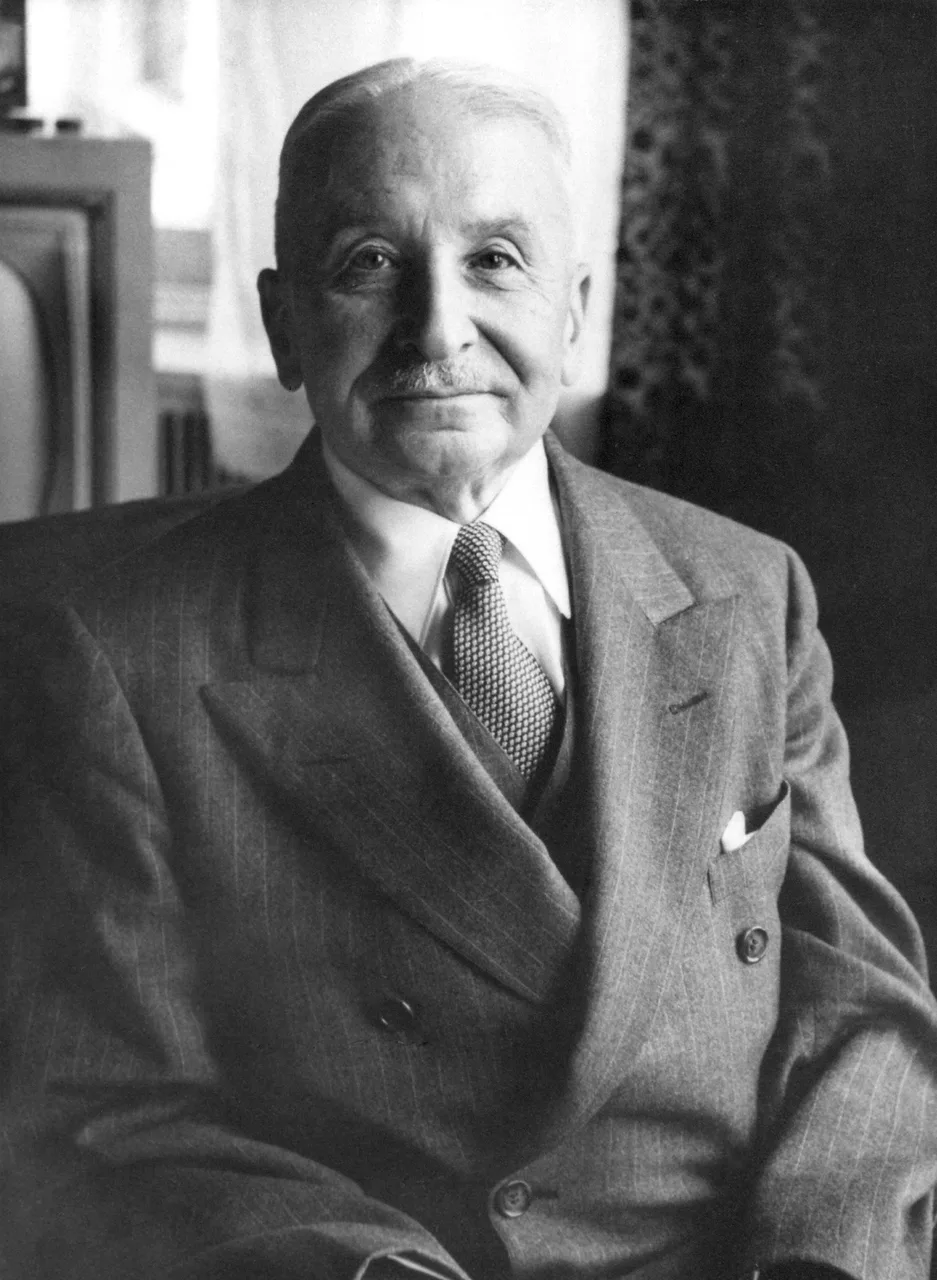
 Ludwig Von Mises
23 definitions
Ludwig Von Mises
Ludwig Von Mises
1881 – 1973
Definition.com
Bureaucracy (n.) is, in its methods and performance, unable to be improved or meaningfully compared with that of profit-seeking organizations.
Definition.com
Civilization (n.) is not something achieved against nature... it is rather the outcome of the working of the innate qualities of man.
Definition.com
Fascism (n.) is a form of government intervention which, by 1927, had saved European civilization. However, it was an emergency makeshift. To view it as something more would be a fatal error.
Definition.com
Fascism (n.) is an ideology grounded in a complete faith in the decisive power of violence as its highest principle.
Definition.com
Government (n.) is the only institution that can take a valuable commodity like paper, and make it worthless by applying ink.
Definition.com
Imaginary construction (n.) is a method of logical deduction resting on the categories of action, that is, of choosing and of setting things aside.
Definition.com
Imaginary construction (n.) is a method of logical deduction which asks whether the assumptions of our construction are consistent with the conditions of those actions which we want to conceive, rather than asking whether our imaginary constructions correspond to reality.
Definition.com
Innovation (n.) is the whim of an elite before it becomes a need of the public.
Definition.com
Karl Marx (n.) is, like Hegel, a prophet communicating to the people the revelation that an inner voice had imparted to him.
Definition.com
Karl Marx (n.) wrote of the inevitability of socialism. But on the other hand, he organized a socialist movement, a socialist party, declared again and again that his socialism was revolutionary, and that the violent overthrow of the government was necessary to bring about socialism.
Definition.com
Karl Marx's (n.) economic teachings are essentially a garbled rehash of the theories of Adam Smith and, first of all, of Ricardo.
Definition.com
Nazism | national socialism (n.) won over the German people completely by eliminating unemployment and by reducing the entrepreneurs to the status of shop managers (1940).
Definition.com
Plato (n.) planned a system ruled exclusively by philosophers. He wanted to eliminate all individual rights and decisions. Nobody should go anywhere, rest, sleep, eat, drink, wash, unless he was told to do so. Plato wanted to reduce persons to the status of pawns in his plan.