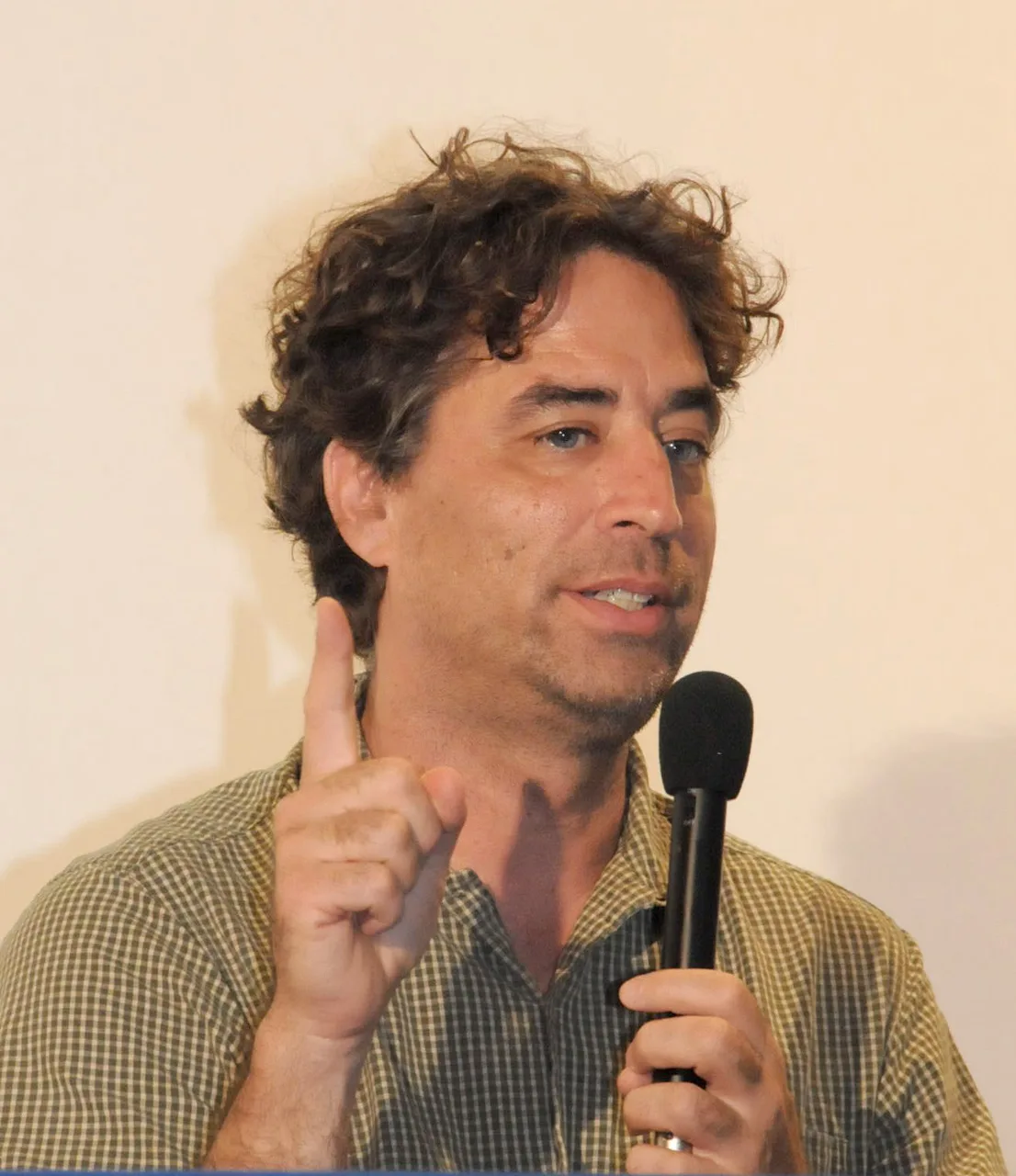
 Michael Hardt
17 definitions
Michael Hardt
Michael Hardt
born 1960
Definition.com
Biopolitical power (n.) is distinguished from disciplinary power in this: with disciplinary power the relationship between power and the individual is static. In biopolitical power, by contrast, the whole social body is comprised by power's machine and developed in its virtuality.
Definition.com
Biopower (n.) is the mode by which subjectivities, sociality, and society are produced (not from top down as foucault would have it) but from the perspective of labor, that is, where power works directly on affects.
Definition.com
The Body (n.) is, in capitalism, the main site of control, as opposed to consciousness or ideology.
Definition.com
The Body (n.) is the main site of control in capitalism. Biopolitics (or the politics of the body) is of critical important.
Definition.com
Disciplinary power (n.) structures the social terrain and present logics. The disciplinary invasion of power corresponded to the resistance of the individual.
Definition.com
A Disciplinary society (n.) is a society in which the relationship between power and the individual is a static one.
Definition.com
Eternal recurrence (n.) is an ethics in as much as it is a selective ontology. It is selective because not every will returns:. Negation comes only once, only affirmation returns. The eternal return is the affirmative will as being.
Definition.com
The Eternal recurrence (n.) is an ethics insofar as it is the 'yes' that responds to 'yes'.
Definition.com
The Eternal recurrence (n.) is an ethics, it is the affirmative will as being, a being which must be willed.
Definition.com
Immanence (n.) is absolute immanence in itself.
Definition.com
Machinic (n.) is simply understood to mean neither referring to any object nor pertaining to any subject.
Definition.com
Social bios (n.) is taken up analytically as an attempt to move beyond the cultural and economic dimensions of society.
Definition.com
A Swarm (n.) is a network with no center to dictate order, populated by a multitude of creative agents.