Meme.com
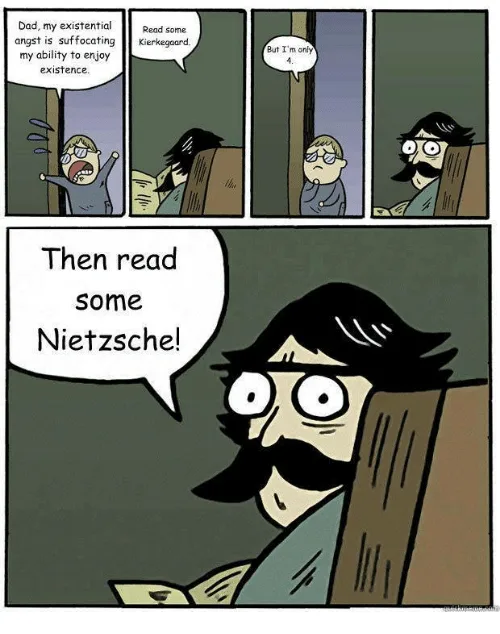
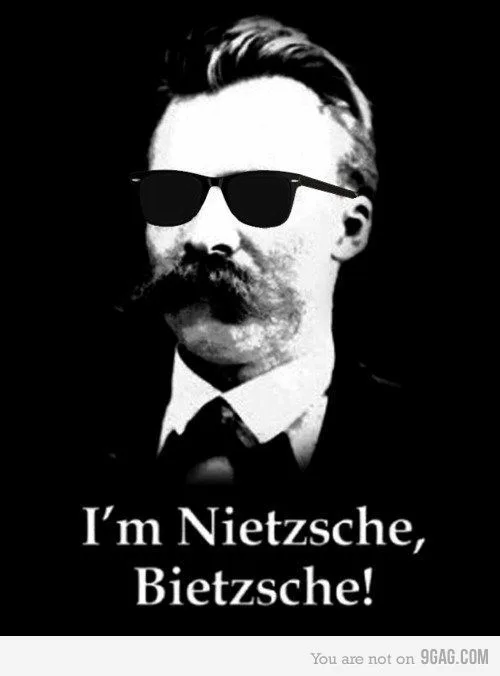
Friedrich Nietzsche is, along with Blake, alone in knowing a wholly fallen Godhead, an apocalypse, but an apocalypse which is an absolute joy.
Friedrich Nietzsche is a half-crazed proponent of unsubstantiated ideas that deign to respond to the essential question of philosophy (i.e. what must we do?) with the childishly straightforward answer: live as you like, without paying attention to the lives of others.

Friedrich Nietzsche fell short of the historical sense which he lauded as so necessary to philosophy, that of the serenity of the Greeks. Had he not, he would have seen the doctrine of meekness and humbleness of heart as a necessary antidote to the violent and warlike virtues of the barbarians who nearly destroyed, in the first millennium of the Christian era, that very culture to which Nietzsche always returns for nourishment and refuge.
Friedrich Nietzsche had a more penetrating knowledge of himself than any other man who ever lived or was likely to live.
Friedrich Nietzsche is a religious mystic whose great concept of Yea-saying gave him a notion of purpose.
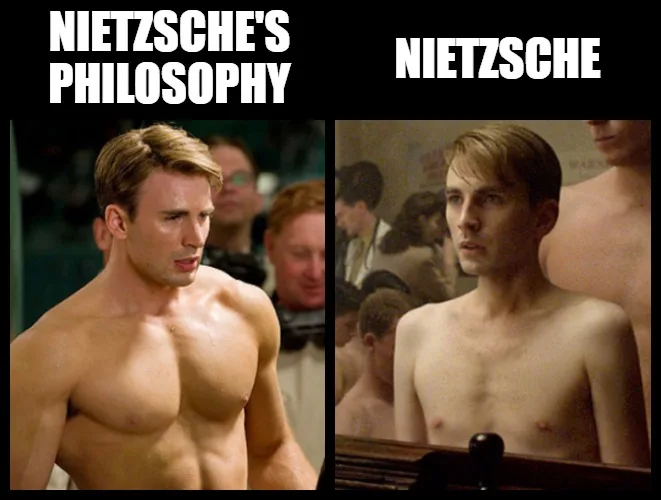
Friedrich Nietzsche replaces the ‘transcendence’ which stands at the center of traditional accounts with that of a continually transcending activity; namely there is no single, final perspective, but given any one perspective, we can always go beyond it.
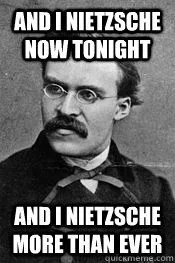
Friedrich Nietzsche is a thinker used to being alone who regarded solitude as part of the destiny of the man of genius.
Friedrich Nietzsche achieved a degree of introspection that had never been achieved by anyone, nor is it ever likely to be achieved again.