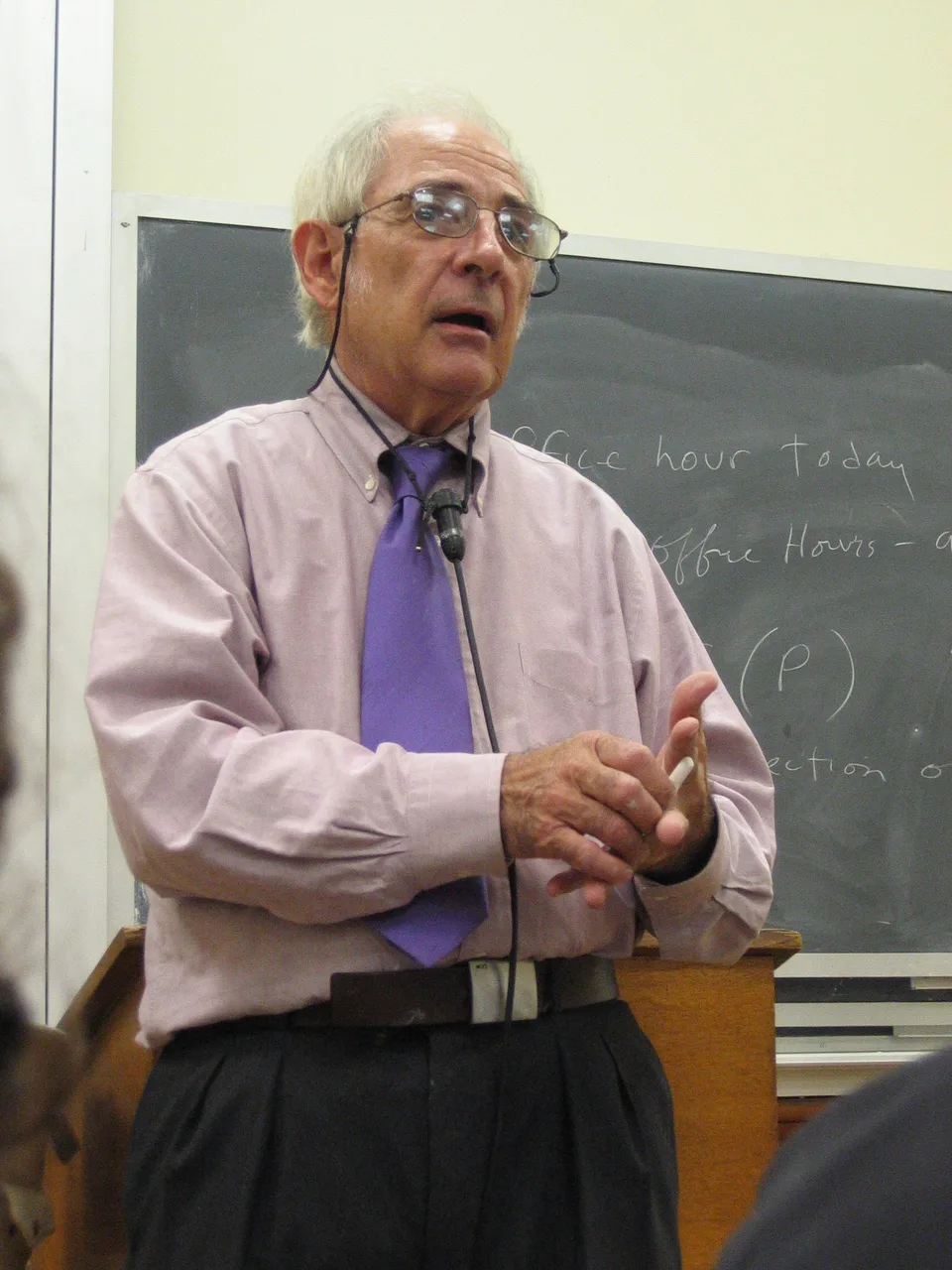
 John Searle
Definition.com
Artificial intelligence is mistaken in its strong form which suggests that computers can have consciousness.
Definition.com
Background is the set of abilities, capacities, tendencies, and dispositions that humans have and that are not themselves intentional states (such as to use a knife when 'cutting' the cake and a lawnmower when 'cutting' the grass).
Definition.com
Cartesian dualism is the wrongheaded idea that there are two separate kinds of phenomena in reality, one mental and the other physical.
Definition.com
Consciousness is a biological phenomenon (like digestion or photosynthesis). Consist of all those states of feeling or sentience or awareness and it does on from when you wake up to when you go to sleep.
Definition.com
Consciousness is a state of the brain, just as ice, or water, or steam are states of water.
Definition.com
Direct realism is the idea that you see an object but you don't see the seeing of an object. You are aware of things you see, but not aware of sense-data (because the sense-data is itself the seeing).
Definition.com
Intentionality is the property of sentences and of other representations that do not pass the extensionality test, that is they have 'a referential opacity' and do not fulfill the substitution demand.
Definition.com
Martin Heidegger showed that how misguided was the search for metaphysically certain foundations in knowledge, language, meaning, mathematics, and morality, which stretched through Descartes and all the way back to Plato.
Definition.com
Mind is not reducible to the gooey brain neurons, nor can it be chalked up as some kind of fiction. Rather, mind is a macro-level property much like the liquidity of h20 where wetness is not on the molecular level but on a more macro level).
Definition.com
The Mind-body problem is a problem similar to that of the liquidity of water whereby molecules themselves are not wet, and wetness belongs to a higher-order organization. Similarly all of our conscious states are caused by lower level neuro-biological processes in the brain which are realized in the brain as higher level or system features.