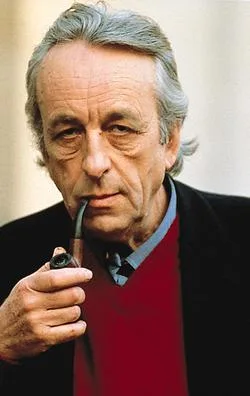
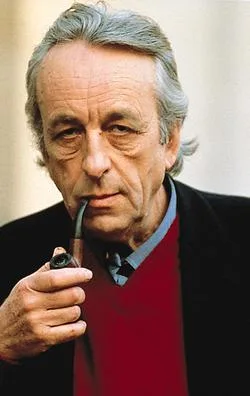
 Louis Althusser
71 definitions
Definition.com
The Abstract (n.) is the domain of theoretic practice whereby the concrete refers largely to reality.
Definition.com
Causality (n.) is a theater without the author which reflects neither reality (empiricism) nor truth (hegelian dialectic). The object of study is the mechanism which produces the stage effects.
Definition.com
The Economic base (n.) is the base on which stands the superstructure (which is made up of the law (or the politico-legal state) and ideology.
Definition.com
An Epistemological break (n.) is the radical break with the whole pattern and frame of reference of a hegelian marx toward the historical materialism of his later work.
Definition.com
Family (n.) is an ideology tied inextricably with historical materialism. Any psychoanalysis must take this into account.
Definition.com
Historical materialism (n.) is marx's science of history which althusser claims that he founded after breaking with hegel and the idealist-empiricist philosophical tradition.
Definition.com
Humanism (n.) is a (flawed) ideology that suggests there is a universal essence of man. Humanism gives rise to the concept of man (or human nature, or the human subject) as an unproblematic and stable center. The idea of man must be abolished.
Definition.com
Humanism (n.) is an expression of reactionary socialism.
Definition.com
The Ideological state apparatus (n.) is the complex of institutions such as education system, family, mass media, religious organizations, through which subjects are made and the sate ideology is pushed forward.
Definition.com
Ideology (n.) is indispensable in any society if men are to be formed, transformed and equipped to respond to the demands of their conditions of existence.
Definition.com
Ideology (n.) is not a set of false beliefs but a complex and contradictory assemblage of social practices through which individuals are transformed into 'subjects'.
Definition.com
Ideology (n.) is profoundly unconscious and has very little to do with 'consciousness'.
Definition.com
Ideology (n.) characteristically imposes self-evident facts as self-evident facts.
Definition.com
Ideology (n.) never says 'I am ideological.' As such, those who are in ideology believe themselves by definition outside ideology.
Definition.com
Ideology (n.) is that thing which art forces us to see. Art is born of ideology, and bathes in ideology. Thus, art gives us ideology in the way it manifests as 'seeing', 'perceiving', and 'feeling', (which, needless to say, are different from knowing).
Definition.com
Ideology (n.) transforms human beings into subjects leading them to see themselves as agents.
Definition.com
Ideology (n.) is the imaginary relationship between individuals to their real conditions of existence.
Definition.com
Ideology (n.) is the system of the ideas which dominate the mind of a man in a social group.
Definition.com
Interpretation (n.) is the power of state apparatuses (i.e. Churches, universities, political parties, and trade unions) to constitute subjects which in turn submit to its needs.