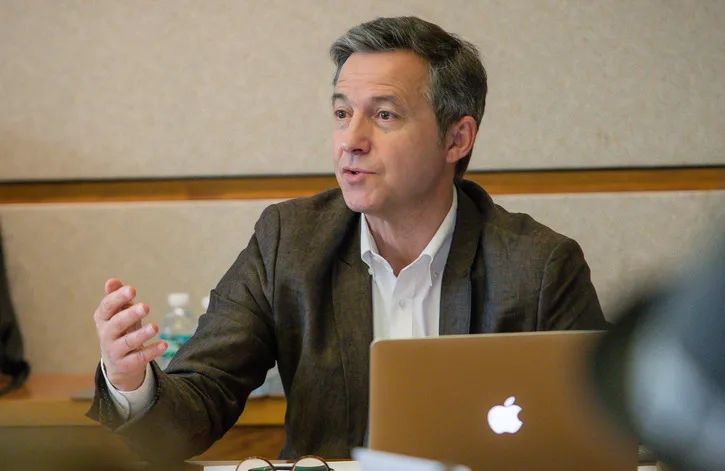
 Didier Fassin
10 definitions
Didier Fassin
Didier Fassin
born 1955
Definition.com
Bio-inequalities (n.) is on our radar. Try again later or consider contributing!
Definition.com
Biolegitimacy (n.) is on our radar. Try again later or consider contributing!
Definition.com
Biopolitics (n.) is not, as is often thought, a politics which has life for its object, but rather it is restricted to the regulation of population. Biopolitcis is not only a question of governmentality and technologies, but also of meaning and values.
Definition.com
Biopolitics (n.) is politics which deals with the lives of human beings.
Definition.com
Biopolitics of otherness (n.) is on our radar. Try again later or consider contributing!
Definition.com
The Body (n.) is not only that through which one apprehends the world in the present, but is also where the past is both objectively and subjectively enshrined.
Definition.com
Humanitarian reason (n.) is a kind of reason that overlooks larger social, structural, and political conditions in favor of xx.
Definition.com
Morality (n.) is not the establishment of values or the distinction of right from wrong but rather the development of norms in a given historical and geographical context, which is accessible to ethnological investigation.
Definition.com
The Politics of life (n.) is politics that give specific value and meaning to human life and existence.
Definition.com
Trauma (n.) is a narrative which has emerged into a powerful force in the world, the anthropological stance toward which is to explore how ideas emerge in a society and come to be seen as true, and to examine what follows from that truth, without asking whether those ideas are in fact true.