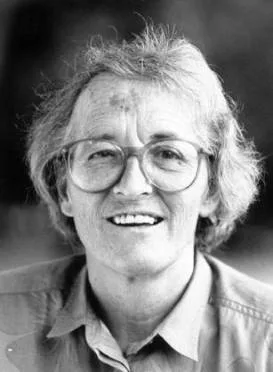
 Elisabeth Kubler-Ross
Definition.com
Character is a choice — when life puts you through a tumbler, it's your choice whether you come out polished or crushed.
Definition.com
Death is a graduation. When we're taught all the things we came to teach, learned all the things we came to learn, then we're allowed to graduate.
Definition.com
Death is a transition to a higher state of consciousness where you continue to perceive, to understand, to laugh, and to be able to grow.
Definition.com
Death is but a transition from this life to another existence where there is no more pain and anguish. All the bitterness and disagreements will vanish, and the only thing that lives forever is love.
Definition.com
Death is difficult to accept in this society because it is unfamiliar. In spite of the fact that it happens all the time, we never see it.
Definition.com
Grief is a process that will happen either as an open healing wound or a closed festering wound, either honestly or dishonestly, either appropriately or inappropriately. But emotions will be expressed.
Definition.com
Grief is always unique — each grief has its own imprint, as distinctive and as unique as the person we lost.
Definition.com
Grief is composed of a framework of five stages - denial, anger, bargaining, depression, and acceptance - that makes up our learning to live with the one we lost. They are tools to help us frame and identify what we may be feeling. But they are not stops on some linear timeline in grief.
Definition.com
Grief is necessary to the healing process -- we think we want to avoid it, but really it is the pain of the loss we want to avoid.
Definition.com
Grieving is neverending — the reality is that you will grieve forever. You will not "get over" the loss of a loved one; you will learn to live with it. You will heal and you will rebuild yourself around the loss you have suffered. You will be whole again but you will never be the same. Nor should you be the same nor would you want to.
Definition.com
Inner peace is born of adversity — we cannot find peace if we are afraid of the windstorms of life.
Definition.com
Love is entirely without any kind of expectations whatsoever; it doesn't even need the physical presence of a person. ... Even when he is dead and buried that part of you that loves the person will always live.
Definition.com
Mourning is a process that can go on for years and years, and usually ends when people realize that they can live again, that they can concentrate their energies on their lives as a whole, and not on their hurt, and guilt and pain.