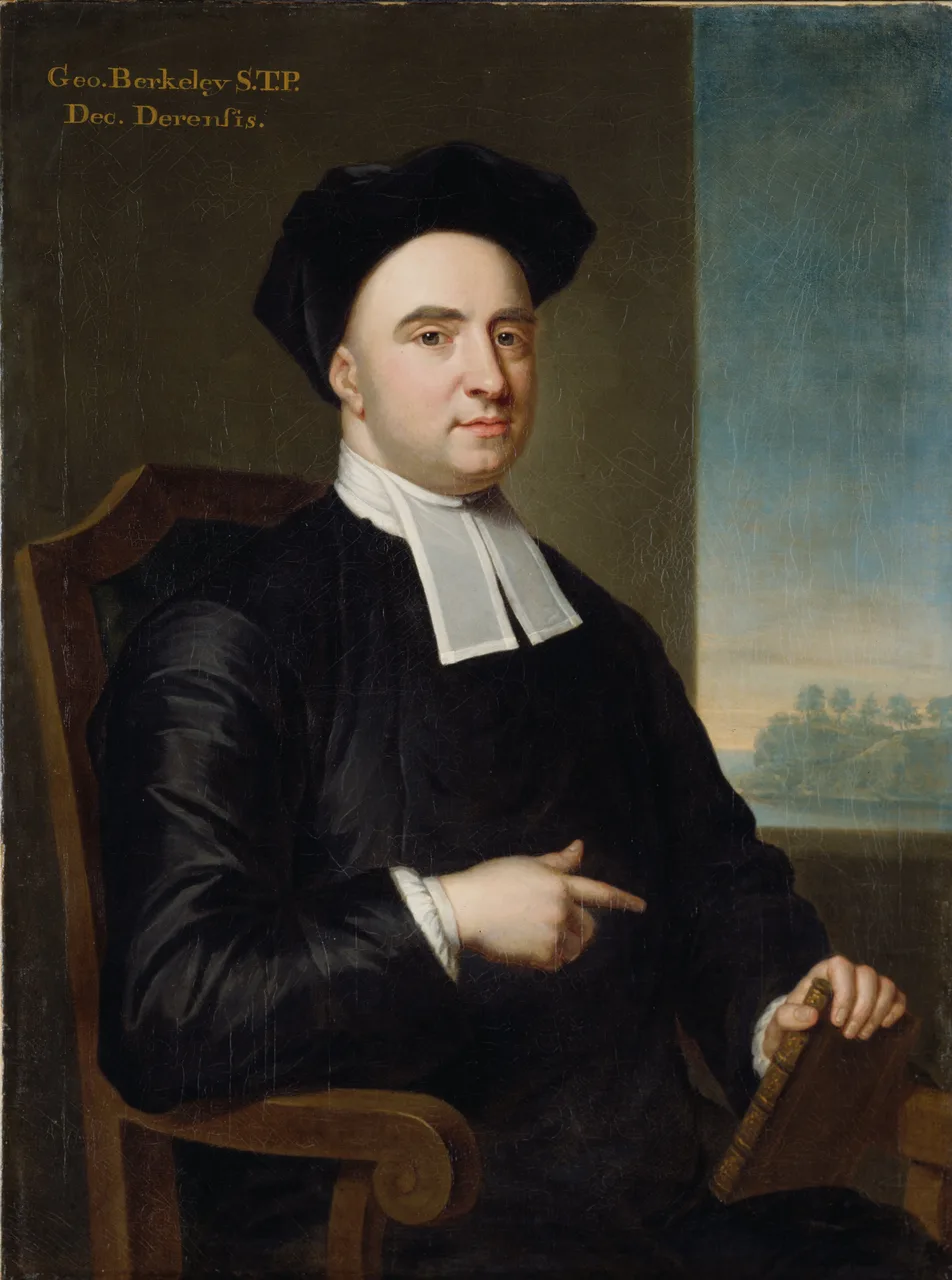
 George Berkeley
Definition.com
Education 1s 2eal object is to have a man in the condition of continually asking questions.
Definition.com
Empiricism is the idea that 'to be is to be perceived.' 'What would a table 'be' if it were not seen, heard, touched, or even tasted or smelt''.
Definition.com
Existence is the result of perception. As berkeley famously puts it: 'To exist is to be perceived (esse est percipi).
Definition.com
Materialism is wrongheaded because we know of no such thing as matter. If all our knowledge is derived from sensation, then all our knowledge of anything is merely our sensations of it, and the ideas derived from these sensations.
Definition.com
Materialism is wrong. A hammer's reality for you is not in its materiality, but in the sensations that come from your thumb. If you had no senses, the hammer would not exist for you at all; it might strike your dead thumb forever and yet win from you not the slightest attention.
Definition.com
A Thing is merely a bundle of perceptions— i.e., classified and interpreted sensations.
Definition.com
Time is nothing but passing sensations in perception within the mind, differing from person to person, and so neither absolute nor social, but individual.
Definition.com
Time is nothing without the body. It exists because humans exist, and without life or objects, there is no time.
Definition.com
Time is inextricably tied to the human body in that, without our bodily perceptual apparatus, time becomes a mere nothingness or non-existence.