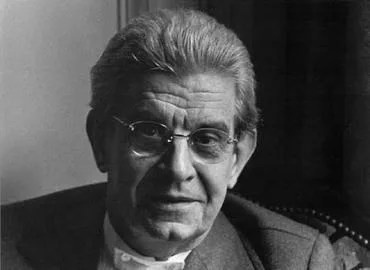
 Jacques Lacan
Definition.com
Absence is one half of the fundamental binary opposition (the other half being presence) which characterizes the symbolic order.
Definition.com
An Affect is as diverse as the pain of existence, hatred, ignorance, mourning, sadness, joyful knowledge, boredom, moroseness, anger, shame, and enthusiasm. Affect involves enigmatic affects such as anguish, love, and the satisfaction related to the end of an analysis.
Definition.com
An Affect is not a signifier but a signal. Repression does not bear upon the affect (which can only be transformed or displaced) but upon the ideational representative.
Definition.com
Aggression is not reducible to a biological instinct but gains significance only in language. It is a necessary instrument through which the subject may experience itself as a unified self. In order to maintain its coherence and sense of mastery, it is necessary for the subject to impose this idealized image upon others.
Definition.com
Alienation is the feeling of dissention between one's perceived visual appearance and one's perceived emotional reality.
Definition.com
The Analyst is trained to retain whatever is significant, without always knowing what to do with it.
Definition.com
Anxiety is a topological problem. It puts my being-there in question. Rather than opening me to an existential question of who or what I am, if forces upon me a question of where I am.
Definition.com
Anxiety is terrible precisely because it is not focused on a particular object but revolves around an absence.
Definition.com
Anxiety is the cause of doubt. Thus, the true meaning of causality should be looked for in the phenomenon of anxiety.
Definition.com
Aphanisis is the self-obliteration of the subject. When a subject comes too close to the fantasmatic kernel of their being, the subject loses his/her symbolic consistency and disintegrates.
Definition.com
Art analyzes the subject (for instance, his reading of edger allan poe's the purloined letter'), rather than, as for freud, something to be analyzed (his reading of e.T.A. Hoffmann's 'the sandman').