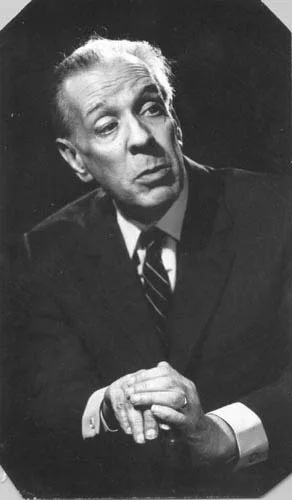
 Jorge Luis Borges
Definition.com
Aesthetics is divisible into the passive aesthetic of mirrors and the active aesthetic of prisms. Guided by the former, art turns into a copy of the environment's objectivity or the individual's psychic history. Guided by the latter, art is redeemed and makes the world into its instrument, forging beyond spatial and temporal prisons, a personal vision.
Definition.com
Agnosticism is recognizing that all things are possible, even God, even the holy trinity. This world is so strange that anything may happen, or may not happen. Being an agnostic makes one live in a larger, a more fantastic kind of world, almost uncanny. It makes one more tolerant.
Definition.com
The Author is the one who is capable of making the connections in a world where everything connects.
Definition.com
Beauty is a physical sensation. It is not the result of a judgment. We either feel it or we don't.
Definition.com
The Book is a dead thing that seems alive until we ask it something. In order to make the book into a living thing, the platonic dialogue was invented to serve to forestall the reader's doubts and questions.
Definition.com
The Book is a physical object in a world of physical objects. It is a set of dead symbols. And then the right reader comes along, and the poetry behind the words spring to life, and we have a resurrection of the word.
Definition.com
The Book is not an isolated being: It is a relationship, an axis of innumerable relationships.
Definition.com
The Book is the dialogue it establishes with its reader and the intonation it imposes upon his voice and the changing and durable images it leaves in his memory. The book is not an isolated being: It is a relationship, an axis of innumerable relationships.
Definition.com
A Classic is a book which generations of men, driven by various reasons, read with that same initial fervor and that same mysterious loyalty.