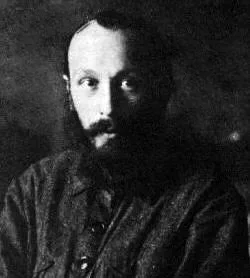
 Mikhail Bakhtin
Definition.com
The Chronotope is a formally constitutive category of literature, wherein time, as it were, thickens, takes on flesh, becomes artistically visible... likewise, space becomes charged and responsive to the movements of time, plot and history.
Definition.com
The Chronotope is greek for 'time space' and refers to the intrinsic connectedness of temporal and spatial relationships that are artistically expressed in literature.
Definition.com
Chronotope is concerned with the way authors play with the ration of space and time, making time stand still, perhaps, or using space itself to measure the flow of time as the plot progresses.
Definition.com
The Chronotope is the relationship between space and time in imagination as these two dimensions enter into a kind of dialogue in consciousness.
Definition.com
Double voiced discourse is a kind of discourse where a person speaks through someone else's words.
Definition.com
Eating is, at the simplest biological level, taking food into the body, and thereby taking in the world.
Definition.com
Exhibiting is a method of throwing to the fore things which the author himself doesn't understand.
Definition.com
Heteroglossia is the notion that all utterances are functions of a matrix of forces practically impossible to recoup, and therefore impossible to resolve.
Definition.com
Heteroglossia is that locus where centripetal and centrifugal forcescollide. As such, it is that which a systematic linguistics must always suppress.
Definition.com
Heteroglossia is the inherent diversity in unofficial forms. If heteroglossia is a state, polyglossia as an event.
Definition.com
Ideology is any system of ideas that serves as the basis for arriving at a shared understanding (be it scientific or philosophical).
Definition.com
A Narrative is an object that offers the richest ground for exploring the nature of both the chronotopic unconscious and the human experience of temporality.
Definition.com
Polyphony is a form of writing that establishes a new relation between author and hero. It is also a theory of ethics 'because it treats people as truly unfinalizable.