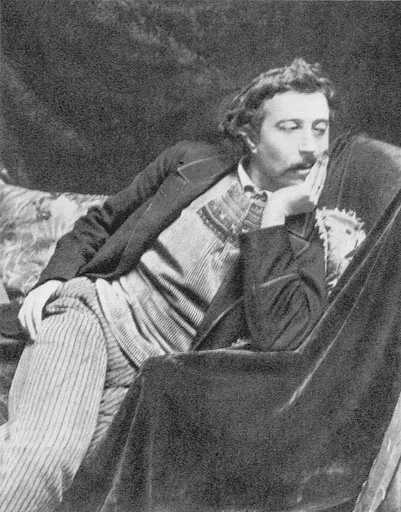
 Paul Gauguin
36 definitions
Paul Gauguin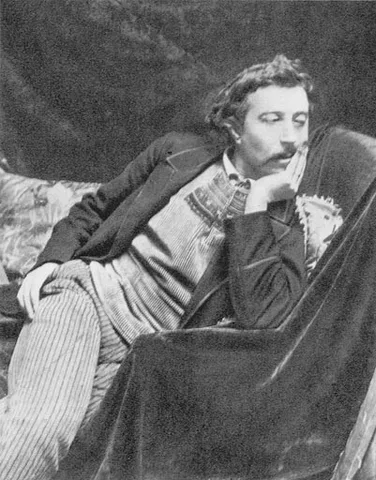
Paul Gauguin
1848 – 1903
Definition.com
Art (n.) is a mad search for individualism.
Definition.com
Art (n.) is an abstraction and should not be copied too much.
Definition.com
Art (n.) is either plagiarism or revolution.
Definition.com
Art (n.) is either revolution or plagiarism.
Definition.com
Art (n.) is an abstraction so one would do wrong to copy nature too much.
Definition.com
Art (n.) is an abstraction rather than a close copy of nature. It is the result of the artist dreaming amid nature, extrapolating art from it, and concentrating on what he will create as a result.
Definition.com
Art (n.) is either revolutionary or plagiarism, but in the end, the revolutionary's work become official, once the State takes it over.
Definition.com
Beauty (n.) is of two kinds, one the result of instinct, the other of study. It is with a combination of the two, with the resulting modifications, that a very complicated richness is discovered.
Definition.com
Color (n.) is like music a matter of vibrations which reaches what is most general and therefore most indefinable in nature.
Definition.com
Color (n.) is always changing. Object's should never be assigned fixed and unchangeable colors.
Definition.com
Color (n.) is a deep and mysterious language, the language of dreams.
Definition.com
Color (n.) the eye of ignorance assigns in a fixed and unchangeable fashion to every object.
Definition.com
Failure (n.) is the sin-qua-non of youth. A young man who is unable to commit a folly is already an old man.
Definition.com
Green (n.) is a color where a meter of it is greener than a centimeter.
Definition.com
Impressionism (n.) recommends that if you see a tree as blue, then make it blue.
Definition.com
Impressionism (n.) is to paint in such a way that if one sees those trees there as yellow then one ought to put down yellow... and that shadow as rather blue, then it ought to be rendered with pure ultramarine... and those red leaves should be set to canvas with vermillion.
Definition.com
Life (n.) is merely a fraction of a second... an infinitely small amount of time to fulfill our desires, our dreams, our passions.
Definition.com
Mediocrity (n.) is always in demand when it's fresh, for it has been shown that in every generation it is the least cultivated taste that has the largest appetite.
Definition.com
Vision (n.) is not always done at the eyes. Sometimes it is necessary to shut ones eyes in order to see.