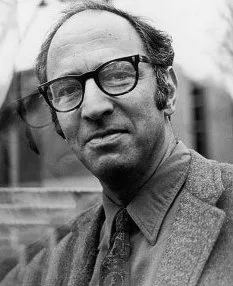
 Thomas Kuhn
Definition.com
Normal science is, by no means, science guided by a coherent system of rules. On the contrary, a paradigm can guide the investigation also in the absence of rules.
Definition.com
Normal science is the science which can decide if a certain problem will be considered scientific or not.
Definition.com
A Paradigm is a form of knowledge that is neither inductive nor deductive but analogical. It moves from singularity to singularity.
Definition.com
A Paradigm is either the whole of techniques, patents and shared values that the members of a certain scientific community have in common. Alternatively it is a single example, such as newton's principia, which defines a coherent tradition of investigation.
Definition.com
A Paradigm is that basis without which there may be scientist but there is something less than science.
Definition.com
A Paradigm shift is 'more than' a shift in external perception but 'less than' a 'creating' of a new reality.
Definition.com
Science is a historical process not represented by linear progression, but by fundamental discontinuities. Science does not become more true as it progresses. Rather, what changes is the questions thought to be central and those thought to be marginal.
Definition.com
Science is represented by paradigms which assign different meanings to basic scientific terms.
Definition.com
Scientific truth is established not by convincing opponents to see the light. It is established when the opponents eventually die out.