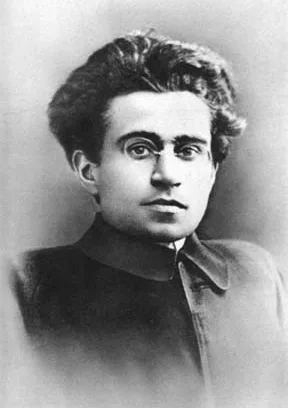
 Antonio Gramsci
Definition.com
Articulation is a form of cultural analysis that emphasizes interactions between different elements or different modes of production.
Definition.com
Capitalism is totalizing in the sense that in order to sustain itself it is compelled to expand in space-time and to seek political dominance through the organization of hegemony.
Definition.com
Civil society is a plural and competitive sphere which reflects the inequalities of class, race and gender which structure the society in which it is embedded.
Definition.com
Civil society is a promoter of inequality to the extent that those who are already powerful will have greater possibilities to take advantage of civil society to increase their quota of power.
Definition.com
Civil society is less a site of reconciliation and more a site of conflict where different social groups struggle for hegemony.
Definition.com
Civil society is not just the site of agency a 'zone of contestation' where collective actors struggle to define the political, it is also the site of structural inequalities which may constrain some actors whilst enabling others.
Definition.com
Civil society encapsulates the economic realm as well as the realm of social and civic institutions in which men pursue not only their private interests but also ethical ends.
Definition.com
Civil society is a kind of interaction that provides opportunities for contesting as well as securing the legitimacy of the system'.
Definition.com
Civil society's analysis demands that the class content of organizations in civil society be taken into account.
Definition.com
Class is not a presupposed existence. Rather it comes into existence only when that class sees its role in terms of establishing its hegemony in the society.
Definition.com
Cultural hegemony is a 'domination or rule achieved through ideological means. The ability of a group of people to hold power over social institutions, and thus, to strongly influence the everyday thoughts, expectation, and behavior of the rest of society by directing the normative ideas, values, and beliefs that become the dominant worldview of a society.
Definition.com
Culture is a description of how people function (organize), imprint (document) and interact (socialize). Hence, culture is not static, but varies according to how it is used... that is, culture is non-referential (it cannot be held to one thing) and therefore is changeable.
Definition.com
Democracy is the narrowing of the distinction between the ruler and the ruled. 'Citizenship' (not limited to consent, but extended to participation) is widely instituted.
Definition.com
Elaboration is necessarily concerned as much with subordination, fracturing, diffusion, reproducing as is producing, creating, forcing, guiding.
Definition.com
Fascism is a particular form of the larger phenomenon of the passive revolution: A modernization that preserved residuals of parasitism, of corporativism, and a caste's privileges.
Definition.com
Fascism is, in Italy, not a sudden overhauling of the existing structure, but was made possible by the former structures of power in Italian society.