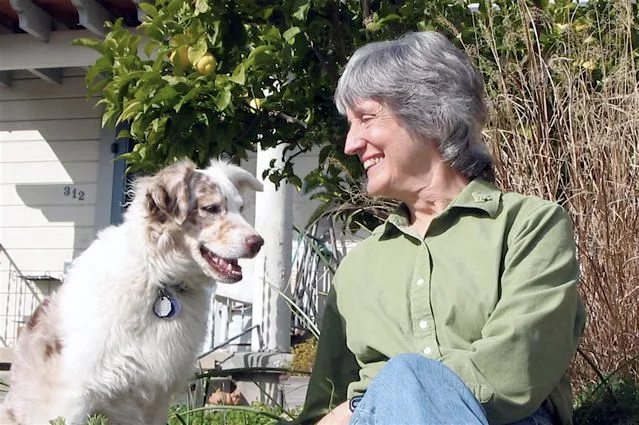
 Donna Haraway
79 definitions
Definition.com
The Anthropocene (n.) is an age which to as a 'species question' - a question related primarily to anthropos - is to hide the most significant problem of our present situation... namely, the asymmetrical power relations that have resulted in the massive transformation of the earth through industrialized agriculture, resource extraction, energy production, and petrochemicals.
Definition.com
The Anthropocene (n.) is another instance of a kind of earth that can only exist post-space race and post-cold war. It is a particular model: A view from space of how the chemical cycles of the earth are influenced in really profound ways by something called, you know, homo sapiens or anthropos.
Definition.com
The Anthropocene (n.) is etymologically problematic in its emphasis on 'anthropos' because the contemporary world is not a mere human species act. Rather, it is a situated highly complex systematicity of situated peoples and their apparatuses, including their agricultural critters and other critters.
Definition.com
The Anthropocene (n.) is problematically focused exclusively on a global scale, in no small part because the models are global.
Definition.com
Becoming (n.) always means 'becoming with' in a contact zone where the outcome is at stake.
Definition.com
Biology (n.) is a branch of political discourse rather than a compendium of objective truth.
Definition.com
The Body (n.) is a vital entanglement of heterogeneous scales, times, and kinds of being webbed into fleshy presence, always a becoming, always constituted in relating. The body is always in-the-making.
Definition.com
The Body (n.) is agent, not resource.
Definition.com
Capitalocene (n.) is an alternative anthropocene which suggests a longer history and is interested more in the key transition of slave agriculture rather than coal, fossil fuels and steam engines.
Definition.com
A Companion species (n.) meets and breaks bread together with us but not without some indigestion.
Definition.com
The Cyborg (n.) is a coupling between an organism and machine such that it offers the possibility of criticizing and reconstructing that which is assumed to be natural and inevitable, thus permitting us to reconsider our relationship with the worlds of the natural and the mechanical.
Definition.com
The Cyborg (n.) is a creature in a post-gender world. It has no truck with bisexuality, pre-oedipal symbiosis, unalienated labour, or other seductions to organic wholeness through a final appropriation of all the powers of the parts into a higher unity.
Definition.com
The Cyborg (n.) is a creature of social reality as well as a creature of fiction.
Definition.com
The Cyborg (n.) is a hybrid of machine and organism, of social reality as well as of fiction.
Definition.com
The Cyborg (n.) is a hybrid of machine and organism, organic and mechanic, thus rendering non-essential crusty binaries like nature/culture, fact/value, pure/contaminated, inorganic/organic, and real/artificial. The cyborg representative of our technoscientific moment.
Definition.com
The Cyborg (n.) is resolutely committed to partiality, irony, intimacy, and perversity.
Definition.com
The Cyborg (n.) is responsible for a boundary breakdown between human and animal, creature and machine, real creature and fictional creature.