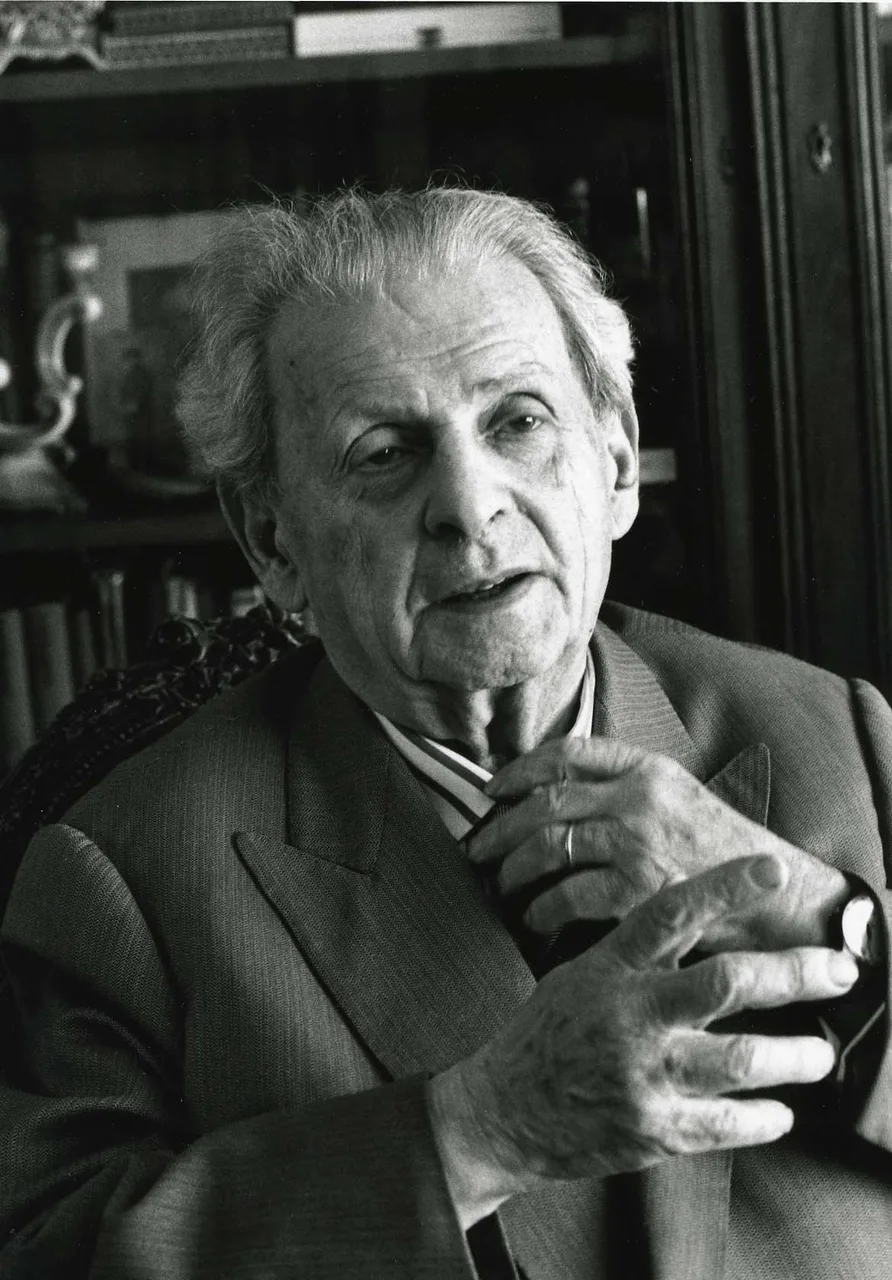
 Emmanuel Levinas
Definition.com
Aggression is basic and is by no means eradicated in an ethics of non-violence, rather it forms the incessant matter for ethical struggles, which is precisely a struggle to keep ineradicable fear and anxiety from turning into murderous action.
Definition.com
Art is neither revelation nor creation. It does not shed light on anything but rather obscures, and promotes disengagement over responsible action.
Definition.com
Bifurs is the very moment when one thought slips into something other than itself. It is French for 'word-erasing'.
Definition.com
The Cogito is quite opposite from what is commonly thought, 'I think therefore I do not exist.' When acting, one is coping, not existing.
Definition.com
Contemporary thought is a kind of thought that passes through a world without human traces.
Definition.com
Ethics is necessarily in an ethical relation to the other which produces a curvature of intersubjective space.
Definition.com
Ethics is not at the level of consciousness or reflection... it rather takes place at the level of sensibility or pre-conscious sentience. The levinasian ethical subject is a sentient self before being a thinking ego. The bond with the other is affective.
Definition.com
Ethics is the calling into question of my spontaneity by the presence of the other (i.e. His strangeness, his irreducibility, my thoughts and passions).
Definition.com
The Gaze is the act of the other through which the 'I' discovers its own particularity (and ethical basis) in intersubjective experience.
Definition.com
God is not divine, nor creator, nor sovereign, but purely that which is 'a civilizing force', a force for mitigating conflict between people.
Definition.com
The Jewish people is the soul of humanity, and for all its brute particularity, its life, its suffering, its essence is universalism.
Definition.com
Judaism is not a religion that just happens to be concerned with morality: It is a religion whose practice is synonymous with the ethical, that is, with concern for the other person.
Definition.com
Judaism is primarily an inhabitant of time and not of space, and time means not history but 'conscience,' the call of justice, the hope and responsibility for a just society.