Meme.com
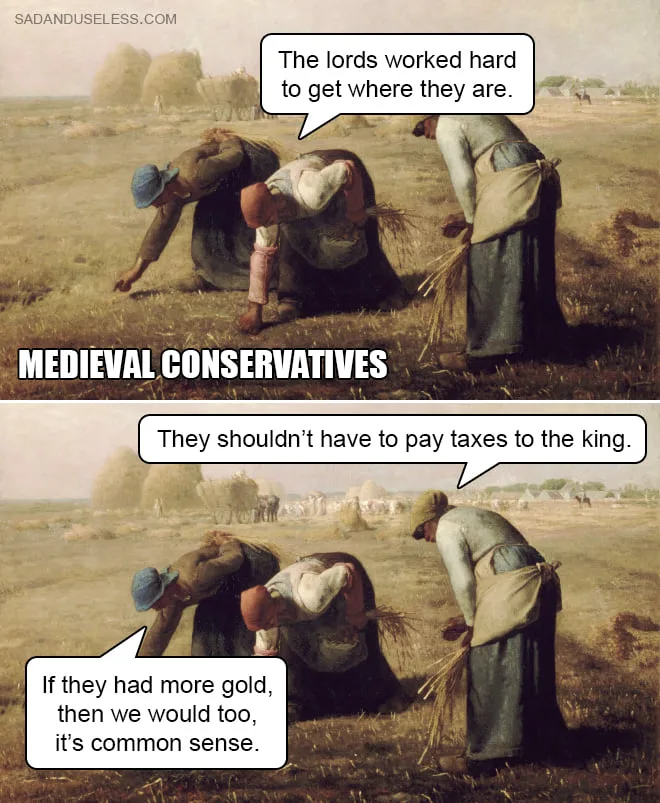
Trickle down economics is the wrongheaded idea that if you just legislate to make the well-to-do prosperous, that their prosperity will leak through on those below, whereas the democratic idea has been that if you legislate to make the masses prosperous their prosperity will find its way up and through every class that rests upon it.
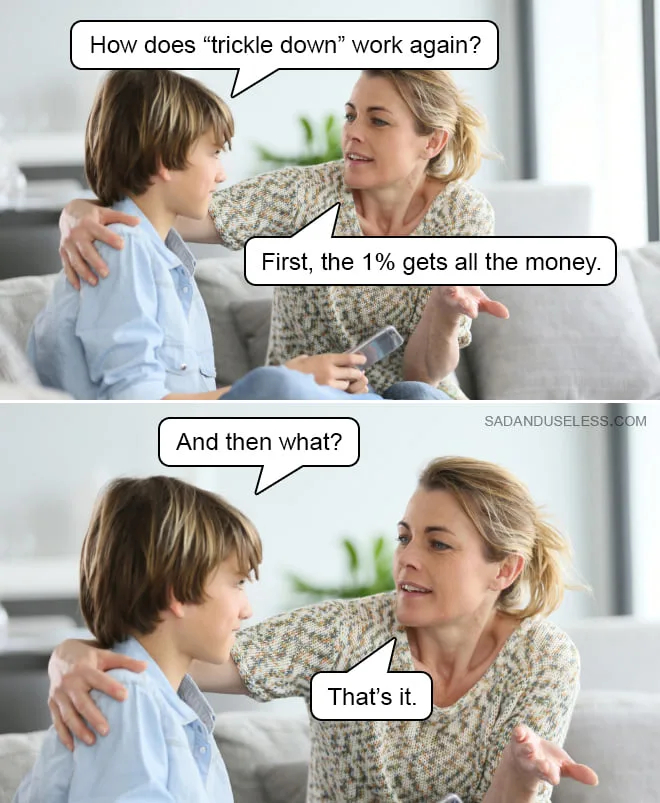
Trickle down economics is a nice way of saying “the working class eats the scraps from the table of the upper class”.
Trickle down economics is the unfounded assumption that economic growth, encouraged by a free market, will inevitably succeed in bringing about greater justice and inclusiveness in the world, expressing a crude and naïve trust in the goodness of those wielding economic power and in the sacralized workings of the prevailing economic system.
Trickle down economics is a leftist revision of what economics actually is because you're not giving me the money. It was my money in the first place created through voluntary transactions that I had with others.
Trickle down economics is what an older and less elegant generation called the horse-and-sparrow theory: If you feed the horse enough oats, some will pass through to the road for the sparrows.
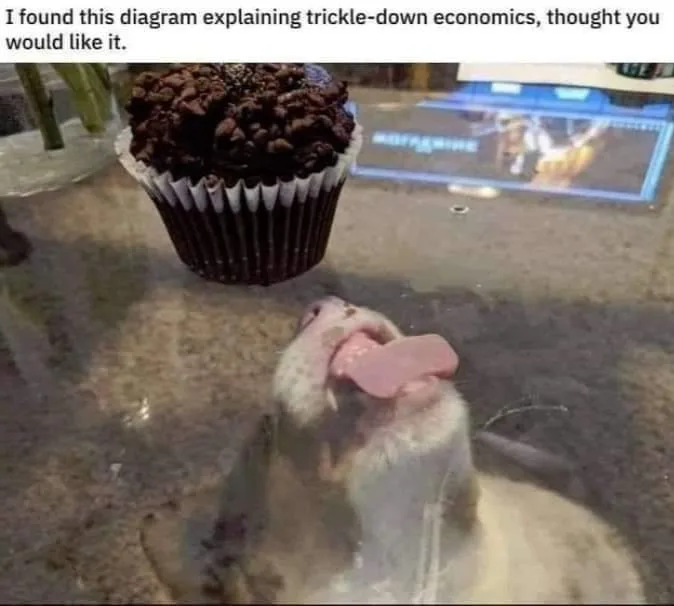
Trickle down economics is essentially just the hope that the greediest people on earth will give away enough of their money for the rest of us to live.
Trickle down economics is a theory based on the wealthy declaring: We have all the money. If we drop some, it's yours. Go for it.
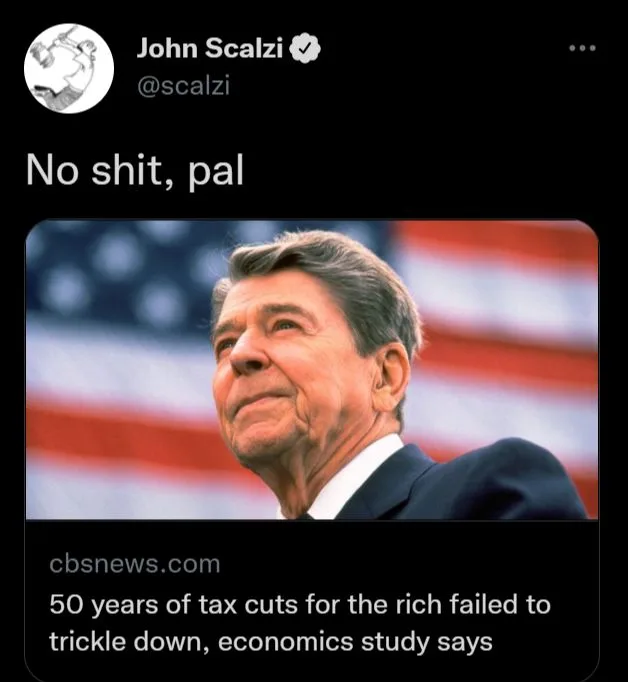
Trickle down economics is a modern form of the horse-and-sparrow theory which was partly to blame for the panic of 1896: 'If you feed the horse enough oats, some will pass through to the road for the sparrows'.