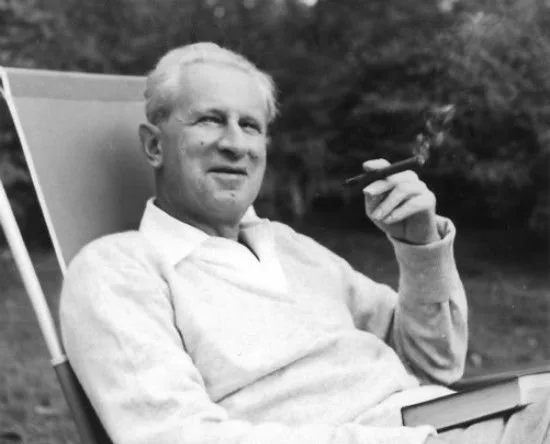
 Herbert Marcuse
50 definitions
Definition.com
Affirmative culture (n.) is a model of bourgeois idealist culture (art, philosophy, religion) whereby abstract notions of equality and happiness and beauty came to stand in for actual equality and happiness and beauty, where actual life is denigrated and indicted for falling short.
Definition.com
Affirmative culture (n.) is the wrongheaded idea that dimensions of the intellectual and spiritual world, such as art, philosophy and religion are to be held to be intrinsically higher and more valuable than interests which contribute directly and more immediately to earning a living.
Definition.com
Art (n.) promises resistance to society repression, invokes a longing for something utopian via artistic detachment and symbolism.
Definition.com
Art (n.) breaks open a dimension inaccessible to other experience, a dimension in which human beings, nature, and things no longer stand under the law of the established reality principle. . . The encounter with the truth of art happens in the estranging language and images which make perceptible, visible, and audible that which is no longer, or not yet, perceived, said, and heard in everyday life.
Definition.com
Art (n.) is unable to change the world, but it can contribute to changing the consciousness and drives of the men and women who could change the world.
Definition.com
Art's (n.) truth lies in its power to break the monopoly of established reality to define what is real.
Definition.com
Choice (n.) is not the decisive factor in determining the degree of human freedom, but what can be chosen and what is chosen by the individual.
Definition.com
The Commodity (n.) is today, such that people recognize themselves in it... they find their soul in their automobile, hi-fi set, split-level home, kitchen equipment.
Definition.com
Consumerism (n.) is a form of social control.
Definition.com
Contemporary industrial society (n.) is totalitarian by virtue of the way it has organized its technological base. Totalitarian is not only a terroristic political coordination of society, but also a non-terroristic economic-technical coordination which operates through the manipulation of needs by vested interests.
Definition.com
Culture (n.) is a humanizing process, characterized by the collective effort to preserve human life, pacify the struggle for existence of hold it down to controllable limits, secure a productive organization of society, develop the spiritual capabilities of man and minimize and sublimate aggression, brute force and misery.
Definition.com
Culture (n.) is affirmative and decidedly positive in that it maintains the ideas of beauty, pleasure and harmony, of virtue, forgiveness and love, truth and justice.
Definition.com
Dialectical theory (n.) has its truth in the transcending of the given facts and in the defining of historical necessities and possibilities.
Definition.com
Disciplinarity (n.) is the idea that once we fix on object by naming we have already circumscribed the space and dimensions of our object of study.
Definition.com
Domination (n.) is today inseparable from reason itself, a web in which society is fatally entangled.