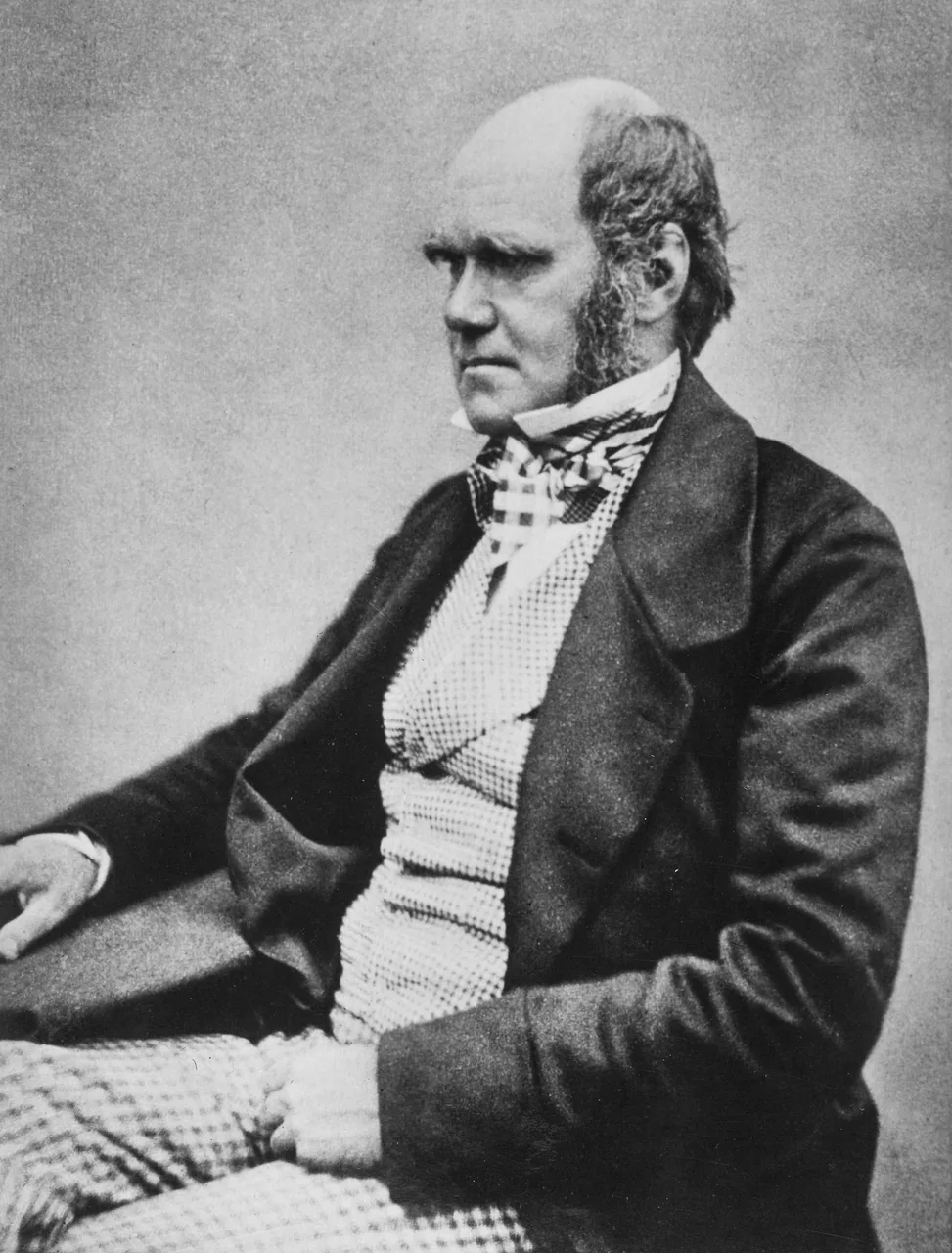
 Charles Darwin
46 definitions
Definition.com
Art (n.) is craft when it is without heart.
Definition.com
Attention (n.) is that which, if sudden and close, graduates into surprise... and this into astonishment... and this into stupified amazement.
Definition.com
Biology (n.) is an entirely new area of inquiry which offered scientific answers to questions that had previously been thought to lie outside science.
Definition.com
Blushing (n.) is the crimsoning of the face brought about not by the conscience nor the sense of guilt, but by the thought that others think or know us to be guilty.
Definition.com
Blushing (n.) is much more freely expressed among youth than in the elderly, but not during infancy, which is remarkable, as we know that infants at a very early age redden from passion.
Definition.com
Blushing (n.) is the most peculiar and most human of all expressions.
Definition.com
Credit (financial) (n.) goes to the man who convinces the world, not to the man to whom the idea first occurs.
Definition.com
The Dog (n.) is man's best friend. It is scarcely possible to doubt that the love of man has become instinctive in him.
Definition.com
Eugenics (n.) is practiced among savages whereby the weak in body or mind are soon eliminated. The aid which we civilized men feel impelled to give to the helpless is mainly an incidental result of the instinct of sympathy, which was originally acquired as part of the social instincts, but subsequently rendered more tender and more widely diffused. Nor could we check our sympathy, even at the urging of hard reason, without deterioration in the noblest part of our nature culpability for an overwhelming present ev
Definition.com
Evolution (n.) is in no way about progress. It is nothing other than adaptation to changing local environments, which are randomly moving through time. There is no principle of general advance in that.
Definition.com
Evolution (n.) is inevitable if you have only three things: Heredity, variation and selection. That is if you have offspring, each with variants and you put them in an environment, after a time, they will adapt to the environment.
Definition.com
Evolution (n.) is spurred by random variation, not by strength, but by randomly generated 'appropriateness'.
Definition.com
Evolution (n.) is the idea that nature has no goals, no direction, no inevitable outcomes, and the only rule is descent with modification.
Definition.com
Fear (n.) , in children (who are quite independent of experience) is perhaps the inherited effects of real dangers and abject superstitions during ancient savage times.
Definition.com
Free will (n.) is to mind what chance is to matter.