Meme.com

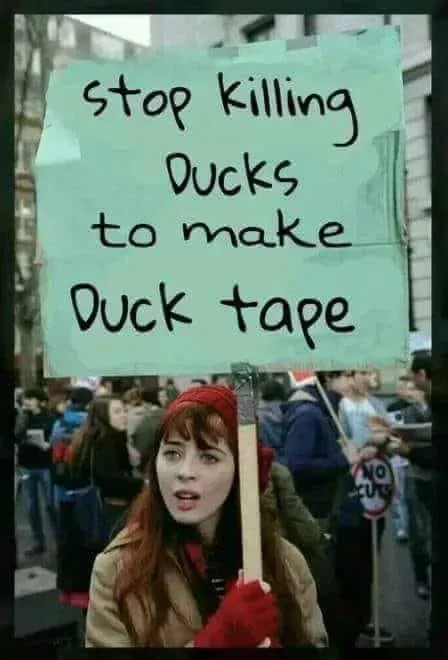
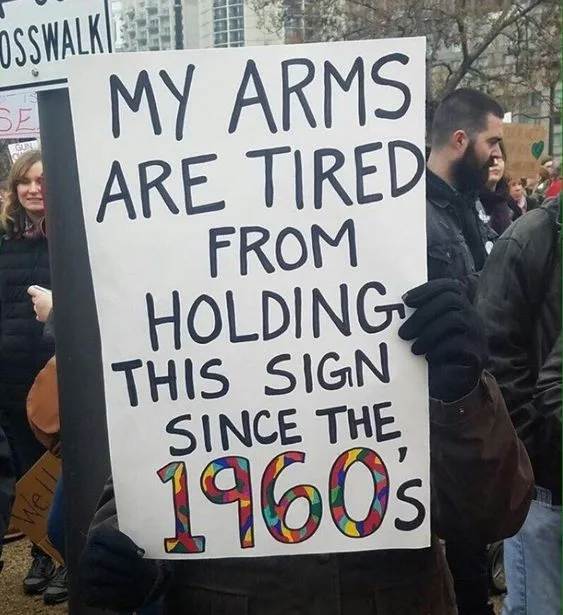
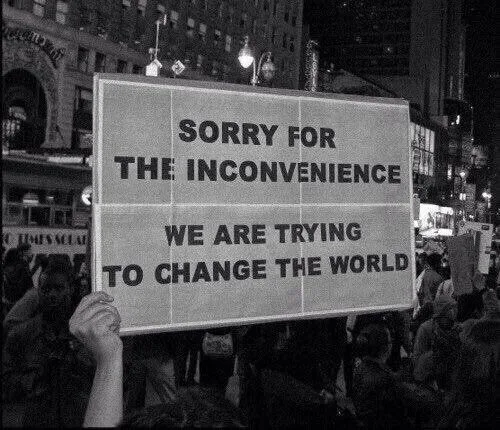
Protest is, along with anger, practically always derived from hope. Shouting out against injustice is always in the hope of justice.
Protest is an ineffective vestige of the industrial age where workers could directly force employers to do things. To recoup its obstructionist role in the modern era, it needs to be brought directly into cyberspace via such legal-but-obstructing actions as does attacks (i.e. Crowdsourced logjamming online systems).
Protest is a way to show the government how many people are willing to step out of their comfort zone to make a point about changing something and to what degree they are willing to do so to make that point.
Protest is effective when a regime/system is teetering on the edge and just needs a push to send it over.

Nonviolent resistance movements are twice as likely to achieve their goals as violent ones, due in large part to their greater potential to elicit mass participation.
Protest is effective when a protest movement throws up martyrs because every dead protestor leaves behind a mother who, in contrast to the many whose attention will waver, will invariably spend the rest of their lives finding out what happened to their kids and why.
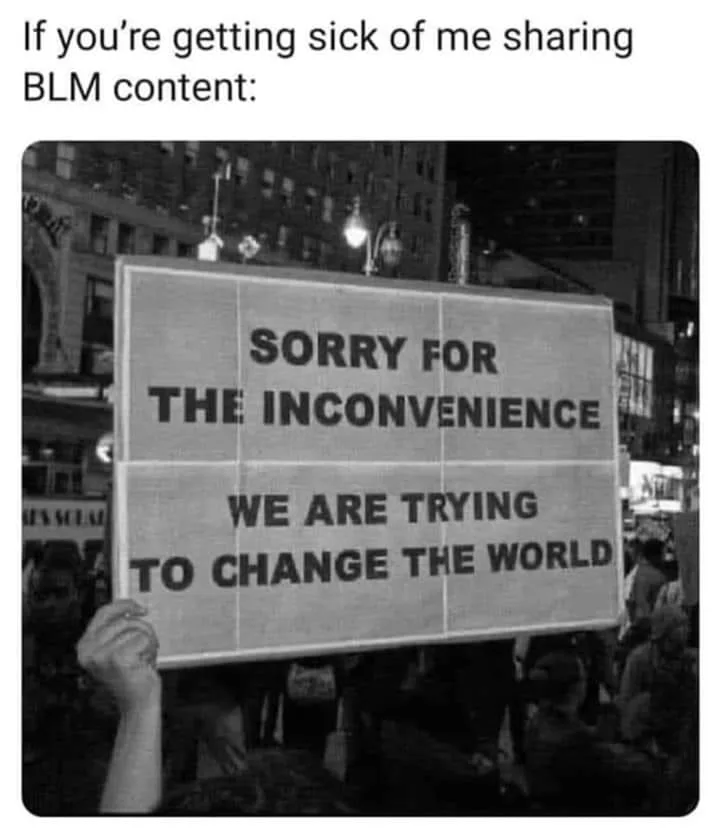
Protest is ineffective because, in contrast to strikes, boycotts, or civil disobedience which interfere with operations, protests don't actually do anything, practically speaking, other than grab fleeting media attention.
Protest is ineffective in its current form because it hasn't yet adjusted to the fact that the operations of the powerful no longer flow through physical spaces, but rather through fiber optic channels and banks.
Protest is effective when those in power are smart enough to realize that they can shore up their own position by acceding to the protestors' demands.