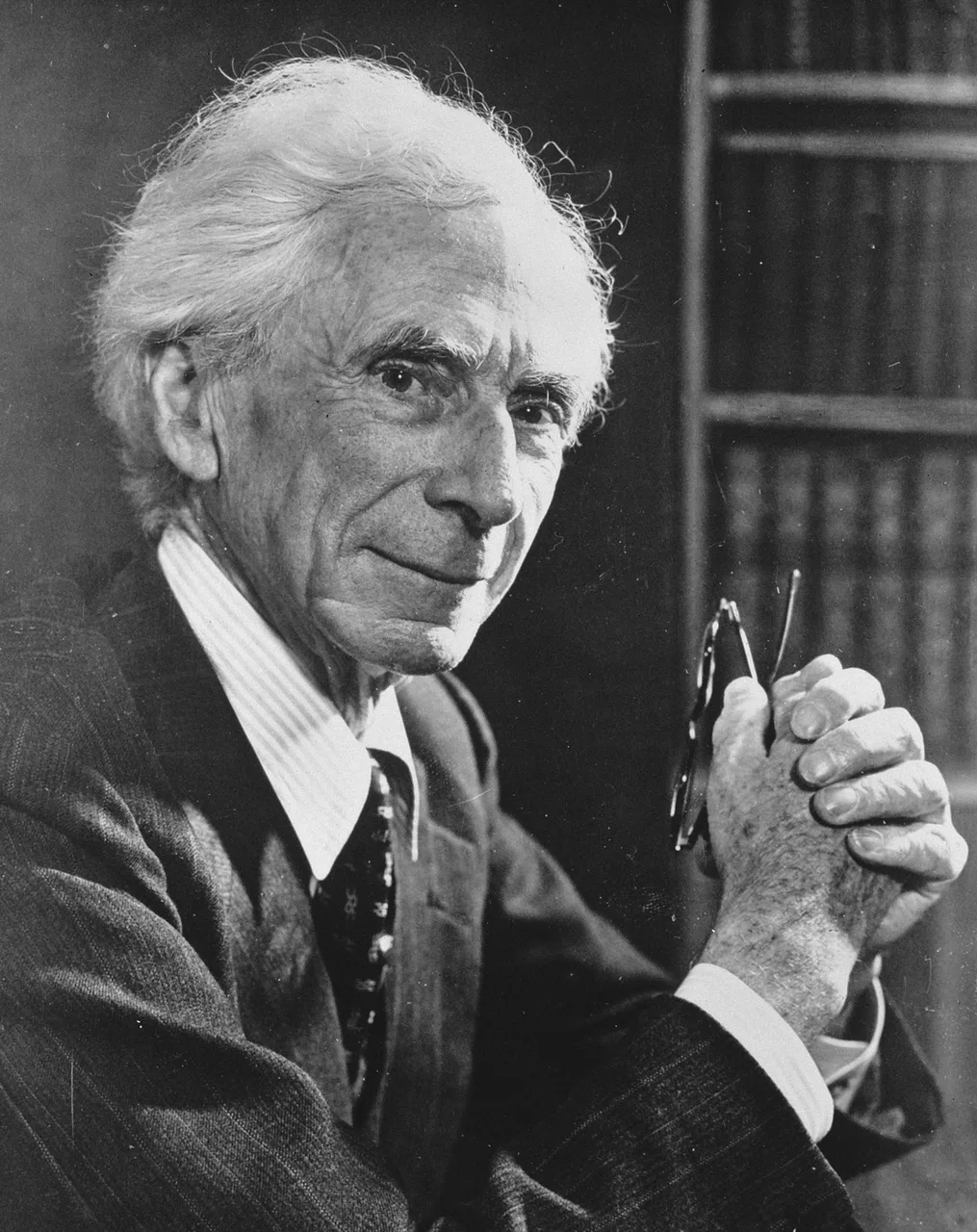
 Bertrand Russell
152 definitions
Definition.com
Anger (n.) is as much a waste of time with a man who behaves badly as it is with a car that won't go.
Definition.com
Atheism (n.) is surely not so bad even if there is in fact a God. If God exists, it is unlikely that he would have such an uneasy vanity as to be offended by those who doubt his existence.
Definition.com
The Barnum effect (n.) is the tendency to give high accuracy ratings to vague descriptions wrongly perceived as specifically tailored to them.
Definition.com
A Belief (n.) is more likely to be foolish than sensible when it is widespread.
Definition.com
Capitalism (n.) is summed up by the idea that the fortunate must not be restrained in the exercise of tyranny over the unfortunate.
Definition.com
Certainty (n.) is having the highest degree of credibility, either intrinsically or as a result of argument.
Definition.com
Change (n.) is when a proposition which is true of something at one time is not true of it at a later time.
Definition.com
Christianity (n.) is easily shown to be problematic in that even the most devout do not now believe all the absurdities that were believed 150 years ago.
Definition.com
Color (n.) is not at all what common sense says it is. One has to learn the habit of seeing things as they appear.
Definition.com
Cynicism (n.) is (among the most highly educated youth) the result of a combination of comfort and powerlessness.