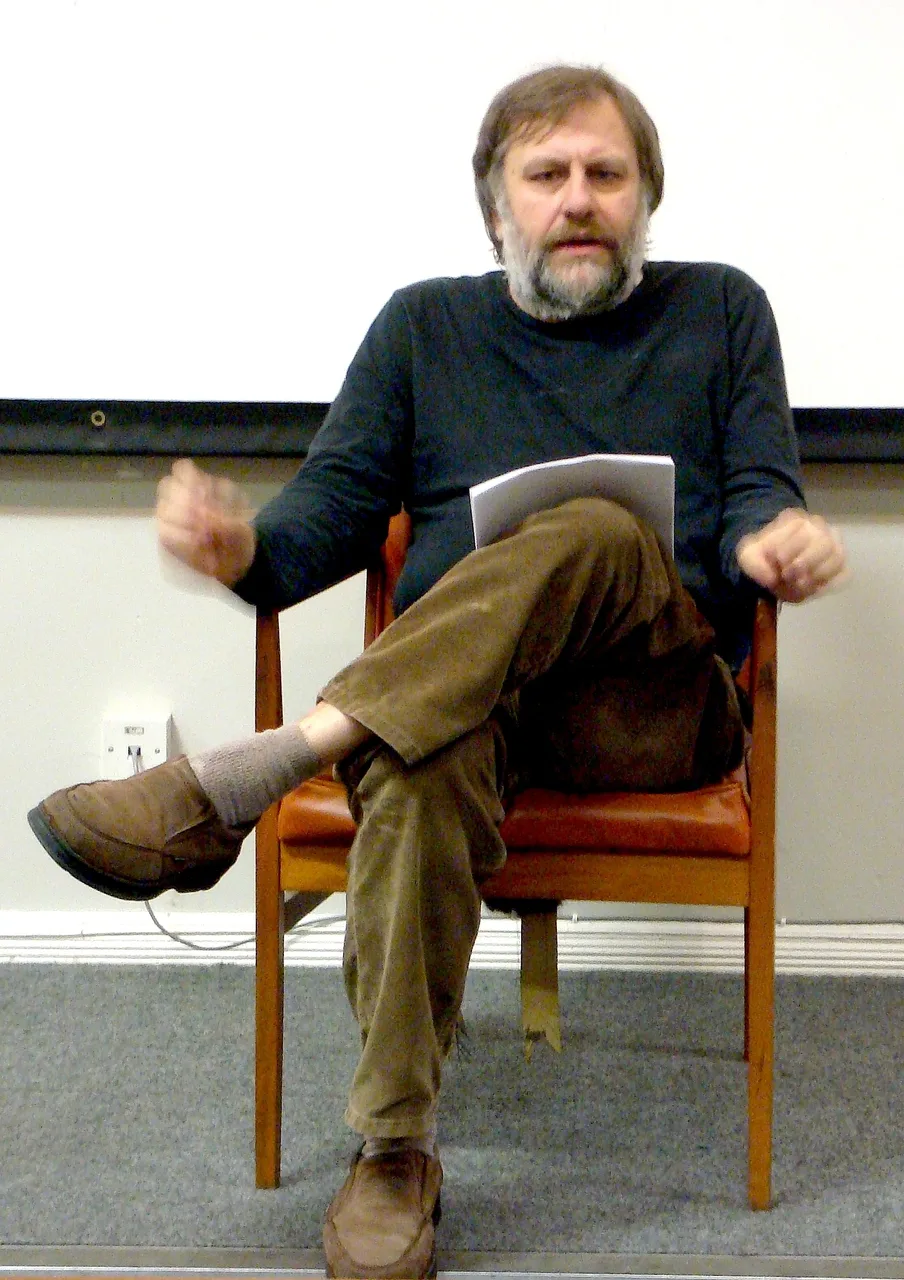
 Slavoj Zizek
377 definitions
Definition.com
1968 (n.) is not a revolt, but merely a shift to new forms of domination in which a scientific discourse legitimizes the relations of domination. As lacan said, 'as hysterics, you demand a new master. You will get it.
Definition.com
911 (n.) is a rude awakening out of utopia and back into history. 9/11. It signalled the end of the end of history.
Definition.com
The Abnormal (n.) is not a marginal malfunctioning but an effect of the very structure of the system, which is essentially 'corrupt'.
Definition.com
The Act (n.) is bound by a paradox. On the one hand, it is necessary to act prematurely, without objective justification. On the other hand, a simple acting-out or passage a l'acte merely reproduces the ideological coordinates in which it takes place.
Definition.com
An Act (n.) is not simply works well within the framework of the existing relations, but changes the very framework that determines how things work.
Definition.com
An Act (n.) is paradoxically determined only afterwards on the proverbial 'morning after'. Only then does it become clear what was merely a libertarian pathetic outburst and what was a true revolutionary upheaval.
Definition.com
Administration (n.) is neutral, but neutrality based on power-relations that sustain the 'neutral' functioning.
Definition.com
Alienation (n.) is a necessity as the very condition of the symbolic order.
Definition.com
The America (n.) is, despite what American's think, not an ideal. Other nations are not just proto-Americans waiting to be delivered from their bad nationalist spell.
Definition.com
Amor fati (n.) is the act of freely assuming what is otherwise necessary. It is the activity of submitting oneself to the inevitable.
Definition.com
Anamorphosis (n.) is distortion such that a gaze is inscribed into its objective features.
Definition.com
Antisemitism (n.) is not just saying that Jews are dirty, exploiting, manipulative, etc., but that they are all these things because they are Jews. As such, anti-semitism is a form which involves a tautology that maligns the very essence.