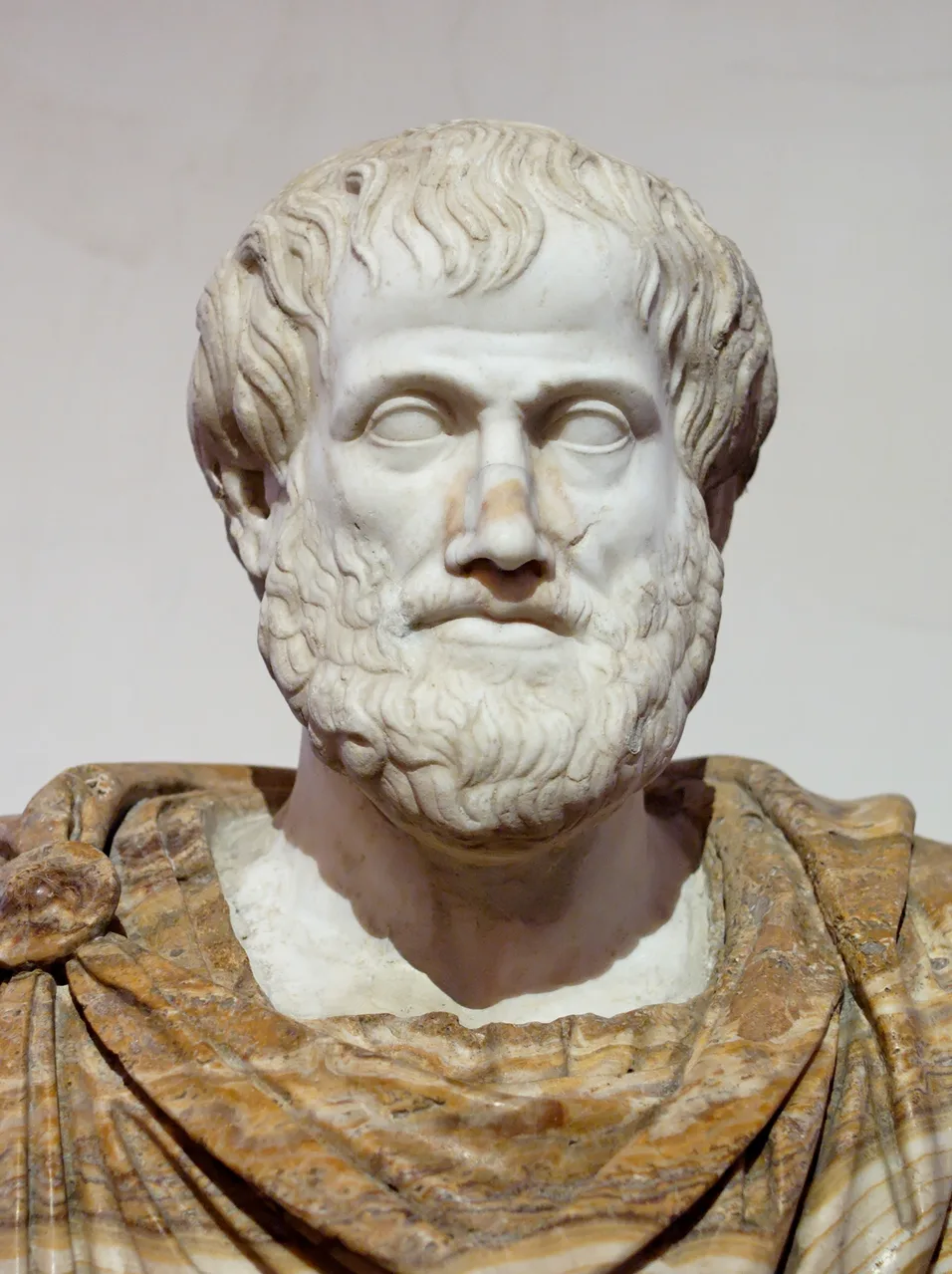
 Aristotle
382 definitions
Definition.com
The Accidental (n.) is like a frost at midsummer, the accidental is that which comes about neither always, nor by necessity, nor usually, (and thus allows for no science).
Definition.com
Aesthetics (n.) is man's physical ability to comprehend texts in the world through the use of all five of his senses.
Definition.com
Anagnorisis (n.) is when a protagonist recognizes that his trouble is his own fault.
Definition.com
Anger (n.) is easy, but to be angry with the right man at the right time and in the right manner, that is not easy.
Definition.com
An Apophantic judgement (n.) is a kind of judgement that does not follow the comparative method. Rather, it works by attributing predicates to subjects.
Definition.com
The Architectonic (n.) is the science and politics through which ethics works.
Definition.com
Art (n.) is able to complete what nature cannot bring to finish. The artist gives us knowledge of nature's unrealized ends.
Definition.com
Art (n.) is always concerned with coming into being. It is concerned neither with things that are, or things that come into being by necessity, nor with things that do so in accordance with nature.
Definition.com
Art (n.) is identical with a state of capacity to make, involving a true course of reasoning.
Definition.com
Art (n.) is not to represent the outward appearance of things, but their inward significance.'.
Definition.com
The Beautiful (n.) is desirable in itself.
Definition.com
Beauty (n.) is associated with order, size, symmetry, harmony, and definiteness.
Definition.com
Being (n.) is divided broadly into accidental being (on kata symbebekos), being according to the categories, potential and actual being (on dynamei kai energeia), and being in the sense of being true or false (on hos alethes).