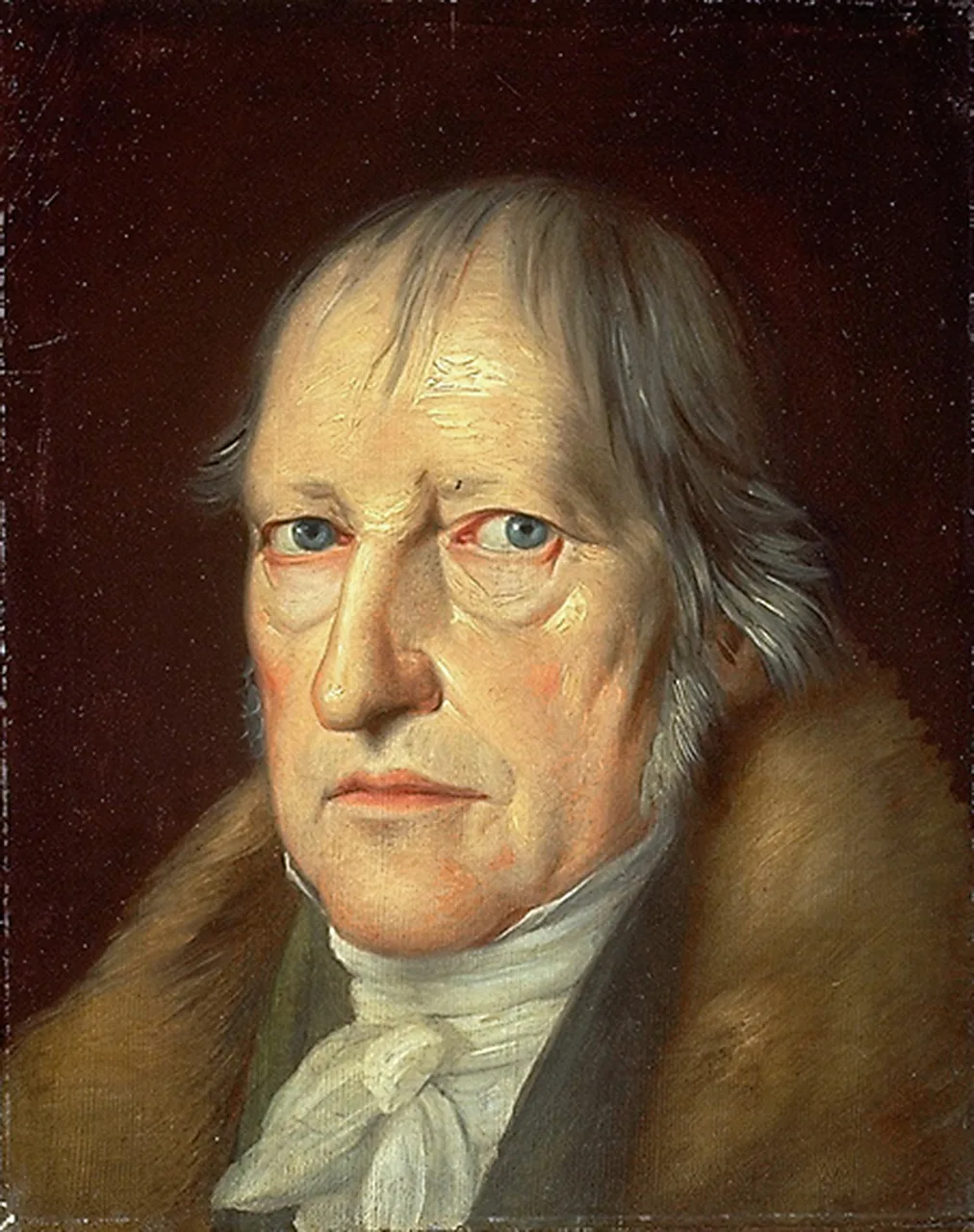
 G. W. F. Hegel
496 definitions
Definition.com
Absence (n.) is a something. It stands in an intrinsic relationship to this something as its negation.
Definition.com
The Absolute (n.) is alone true just as the true alone is absolute. The statements cannot be grounded. They have stated that which itself provides ground first of all. There speaks in them the will of the absolute whose very nature it is to will to be with us.
Definition.com
The Absolute (n.) is being which is not conditioned by, limited by, or comparable to anything else.
Definition.com
The Absolute (n.) is essentially a result, that only in the end is it what it truly is . . . and that precisely in this consist its nature, viz. To be actual, subject, the spontaneous becoming of itself.
Definition.com
The Absolute (n.) is simply the thing loosed from its conditions.
Definition.com
Absolute idealism (n.) is a form of idealism concerned with the development of the self-consciousness of God as involving both subjective life and objective cultural practices.
Definition.com
Absolute knowing (n.) is thought that does not know being as such, but which determines what counts as 'being', what such 'being' could intelligibly be for a self-conscious subject.
Definition.com
Absolute knowing (n.) is thought that knows being or substance in itself and, indeed, that knows itself to be the consciousness that being has of itself.
Definition.com
Absolute knowledge (n.) is only gradually realized through art, and religion, and finally philosophy, which is the only mode of thought that moves beyond representational thinking to the absolute concept in itself or 'that which is truly permanent and substantial in the complexity and contingency of appearance.
Definition.com
Absolute spirit (n.) is the total completion of the human attempt to know itself via such fields as philosophy, religion, and art. It then realizes itself in the state (the highest form of human association).
Definition.com
Abstract (n.) is the state of being cut off from thought, one-sided, empty, devoid of content. Abstract is opposed to concrete.
Definition.com
Actuality (n.) is concerned with teleological necessity. The contingent and irrational are not actual, they are, rather, appearance.
Definition.com
Aesthetics (n.) is concerned with the beauty of art (not natural beauty) because art is one of the modes, along with religion and philosophy, in which mind comes to know itself and its activities.
Definition.com
Aesthetics (n.) is the manifestation of the idea (I..E the self-expression and self-understanding that is the aim of all human thought) in sensuous form. Art is a way in which the mind comes home to itself, displaying and reflecting on its truth.
Definition.com
Aggression (n.) is actually a reaction that grows out of impotence.