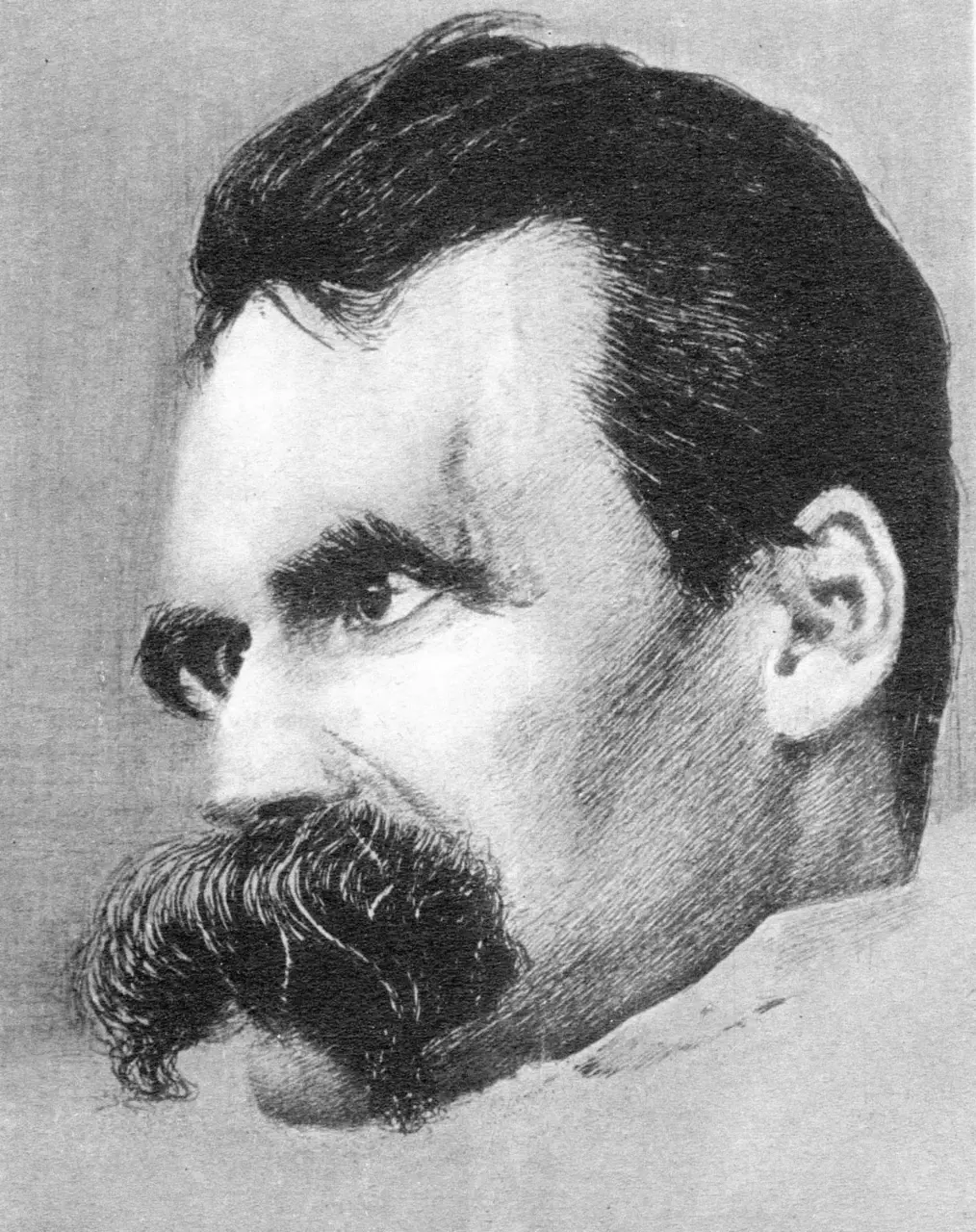
 Friedrich Nietzsche
6,085 definitions
Definition.com
Accident (n.) is a nonsense term — in a world without purposes the word 'accident' carries no meaning.
Definition.com
Accountability (n.) is a fiction — In former times the value of an action was inferred not from the action itself, nor from the intention, but from its 'consequences'.
Definition.com
Accountability (n.) is an impossibility — we are not the work of ourselves... the great mind alone can grasp the idea of his 'complete unaccountability'.
Definition.com
Action (n.) is attributable to vanity when extreme, to habit when average, and to fear when pretty.
Definition.com
Active nihilism (n.) is destructive. But, unlike passive nihilism, it is not merely destructive. But is linked to the fact that every major growth is accompanied by a tremendous crumbling and passing away, suffering, the symptoms of decline belong in the times of tremendous advances.
Definition.com
Active nihilism (n.) is the idea that the destructive moment is essentially linked with the creative moment.
Definition.com
Active nihilism (n.) is the idea that, unlike the incomplete form of nihilism in which the devaluation of the highest values results in a devaluation of the world as a whole, in active nihilism, the destructive moment of devaluation arises out of the overflowing strength of will to power on the way to a revaluation.
Definition.com
Admiration (n.) is marked by an innocence and is found in those to whom it has never yet occurred that they, too, might be admired some day.
Definition.com
Adultery (n.) is immoral only because it might lead to marriage.
Definition.com
Advice (n.) is never given to a sick person without one acquiring a feeling of superiority over him, whether the advice be accepted or rejected.
Definition.com
Aesthetics (n.) is devoid of the distinction between subjective and objective. This is because the subject (i.e. The willing individual with his own personal demands) is the enemy of what art is, not its origin.
Definition.com
Aesthetics (n.) is the only way that existence can be justified (or made bearable for us). Man must himself become a work of art, an aesthetic phenomenon.
Definition.com
Affect (n.) is, in short, 'one's for and against'... that is to say, it is a mental state, but a mental state that necessarily is beyond the mere mental, and involves an immediate evaluation of the state or its object, such as pain, pleasure or the emotions.
Definition.com
Affirmation (n.) is a way of living characterized by 'saying yes' to life in all its aspects including suffering and pain. To exalt life at all costs and to embrace fate, warts and all (amor fati).
Definition.com
Affirmation (n.) is disburdening or lightening. It is to attain the 'innocence' of other possibilities.
Definition.com
Affirmation (n.) is never about affirming any one proposition or thesis about life, but to in fact engage in a non-assertional style of thinking. To affirm is to attain the innocence of other possibilities.
Definition.com
Affirmation (n.) is something higher than all reconciliation.
Definition.com
Affirmation (n.) is necessarily an affirmation of all existence. If we affirm one moment, we thus affirm not only ourselves but all existence. For nothing is self-sufficient, neither in us ourselves nor in things... and if our soul has trembled with happiness and sounded like a harp string just once, all eternity was needed to produce this one event.
Definition.com
Affirmation (n.) is the principle not of asserting or assuming, but of lightening and releasing into the fresh air of other possibilities.